Quick Answer:
If system pressure is fine for a single faucet but drops when several fixtures run at once, the supply or control devices are reaching their limit. Start by testing pressure with fixtures isolated, confirm PRV setting, and observe meter flow patterns to find whether the issue is the main supply, a pressure regulator, or a demand spike from another system like irrigation.
Why This Happens
- Municipal supply or private well systems have a maximum flow rate. A single faucet draws little; multiple fixtures together can exceed what the supply or pump can deliver, so pressure falls.
- A pressure reducing valve (PRV) can behave normally at low flow but drop pressure sharply when flow increases if it is out of adjustment or failing.
- External demands — for example, sprinklers or a neighbor’s heavy use in shared services — cause temporary low pressure during those cycles.
- Partial blockages or undersized piping will limit total flow even if static pressure looks normal at an isolated point.
Step-by-Step What to Do
Step 1 — Prepare and note the problem
- Work when you can reproduce the issue (for example, when multiple people are home or during irrigation run times).
- Write down which fixtures are open when pressure drops and roughly how much flow is affected.
Step 2 — Test pressure with fixtures isolated
- Close all faucets, appliances, and irrigation zones. Make sure nothing automatic is scheduled.
- Attach a simple screw-on pressure gauge to an outside hose bib or laundry outlet and note the static pressure. Then open one fixture and watch the pressure. Next open a second fixture and compare.
- This controlled check shows whether pressure only falls when total demand rises.
Step 3 — Observe meter flow patterns
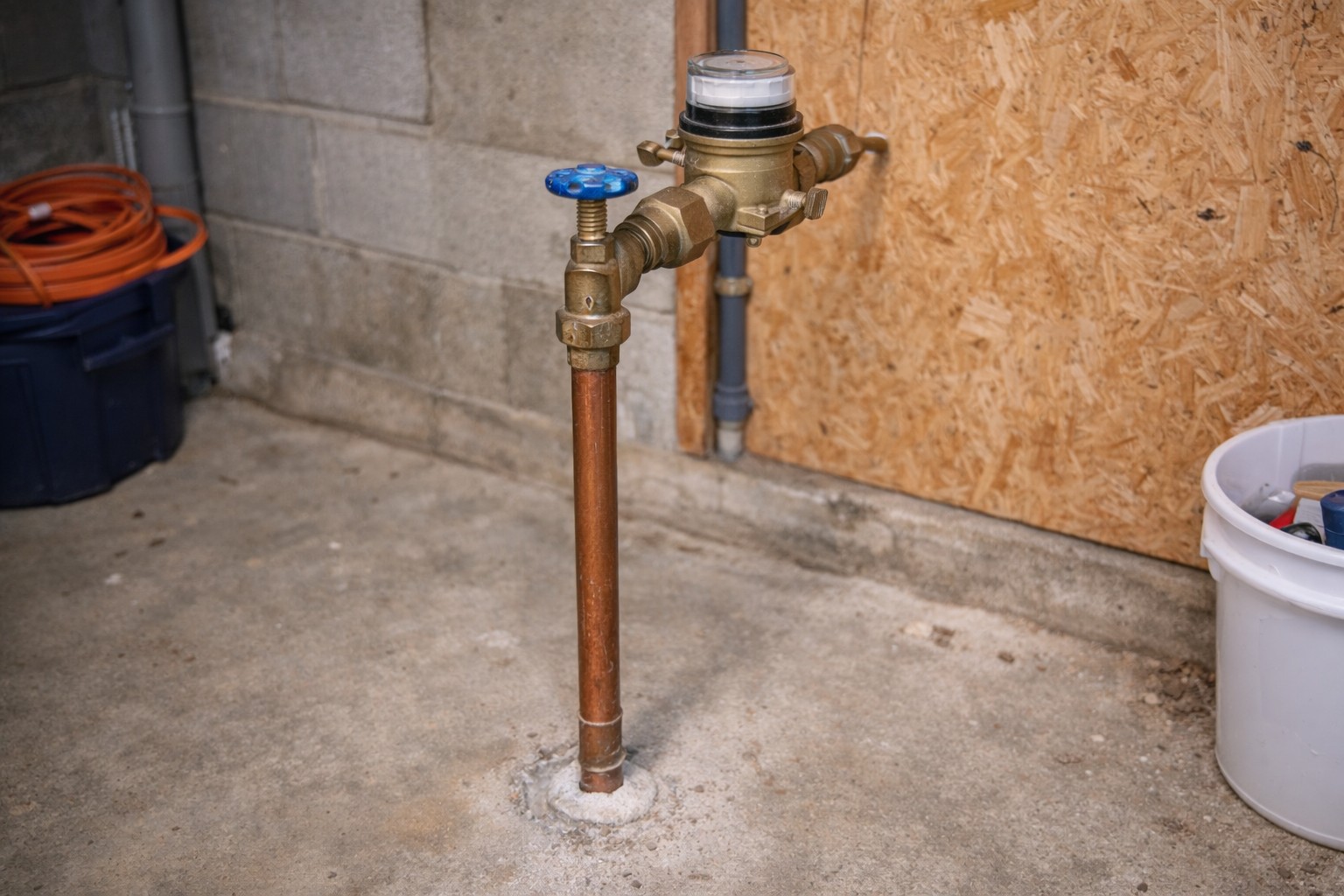
- With the gauge in place, go to the water meter (or its flow indicator) and watch while you turn fixtures on and off. Note whether the meter shows steady higher flow, short surges, or a constant high flow when pressure drops.
- Patterns help: a steady sustained high flow suggests real demand; short bursts can mean automatic cycles or intermittent leaks.
Step 4 — Confirm PRV setting
- Locate the pressure reducing valve if your house has one (usually near the main supply line after the shutoff). A brief visual check for leaks or corrosion is safe.
- If you have a pressure gauge reading, compare it to the expected PRV setting (commonly 50–60 psi for many homes). If the PRV keeps pressure low only under flow, it may be worn or misadjusted.
- Minor PRV adjustments are possible, but if you’re unsure or the valve looks corroded, hire a professional to adjust or replace it.
Step 5 — Check for external or timed demands
- Note if the issue lines up with irrigation cycles, water softener regeneration, or known peak times in your area.
- Temporarily disable or reschedule those systems to see if household pressure improves during high demand.
Step 6 — Review results and next steps
- If pressure stays close to normal with fixtures isolated but always drops with combined use, the problem is demand-related rather than a single fixture.
- Use your observations to decide whether you need a PRV repair, a system upgrade, or professional leak/flow diagnosis.
If you want quick reading on related patterns, check these notes: Pressure fine until second fixture opens and Pressure unstable when sprinkler zone starts.
What Not to Do
- Do not assume fixture failure when pattern is demand-related.
- Do not open or force adjustments on the PRV or pump controls unless you know the system; incorrect changes can cause damage or unsafe conditions.
- Do not ignore the water meter or flow evidence — it often points to shared demand or a user schedule problem rather than a hidden fixture fault.
When to Call a Professional
- Persistent low pressure when several fixtures run and you’ve confirmed it’s not temporary demand (meter shows continuous high flow) — call a plumber or utility technician.
- If the PRV appears faulty, corroded, or you need it adjusted and you don’t have experience.
- Suspected leaks in the main or fast pump cycling on a well system — those need prompt professional attention.
Safety Notes
- Turn off the main water valve before doing any work on piping. If you’re unsure where that is, ask a professional.
- Avoid working on pressurized components without a gauge and proper fittings — released pressure can spray water and cause injury.
- Electrical equipment near water (well pumps, controllers) should only be inspected or serviced by qualified personnel.
Common Homeowner Questions
- Why does the pressure feel fine at one sink but not when shower and dishwasher run?
Because multiple outlets increase total flow demand; the supply or PRV may not keep pressure up under combined flow. - Can I fix a PRV myself?
Minor checks are okay, but replacing or adjusting a stuck PRV is best done by a plumber to avoid incorrect settings. - Will a bigger pipe help?
Upsizing can improve maximum flow but is a bigger job; confirm the real cause first with the meter and isolated tests before changing piping.
For more related articles, see the Pressure Drops When Multiple Fixtures Run hub.