Quick Answer:
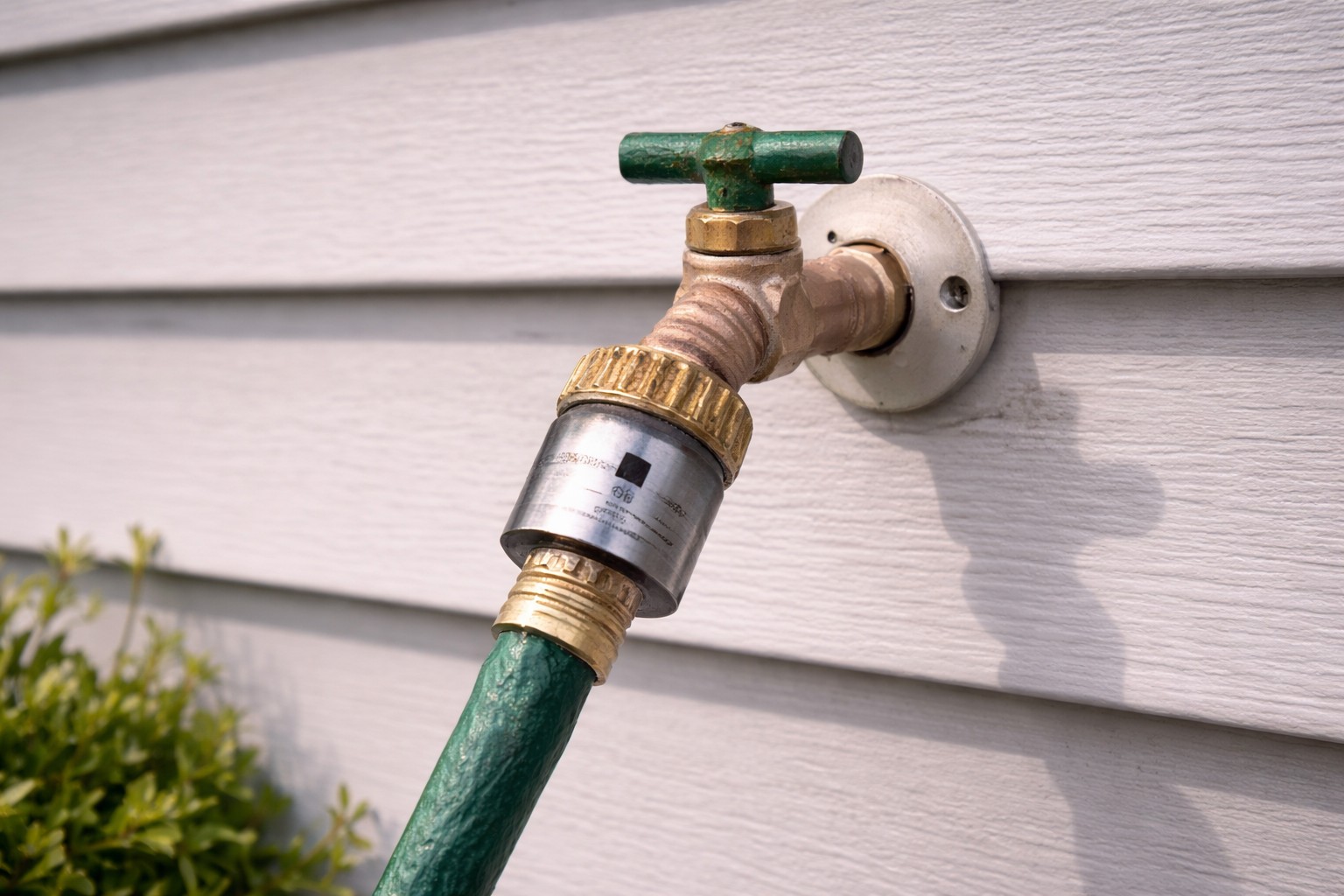
When an outdoor hose or sprinkler runs and indoor water pressure drops, the house is likely sharing flow from the same supply. Before assuming a broken pipe or failing fixture, isolate tests, check the pressure regulator, and watch the water meter to see if the pattern matches demand from the hose.
Why This Happens
Most homes have one supply line feeding both indoor fixtures and outdoor hoses. When a hose, sprinkler or irrigation valve opens, it adds significant flow demand. That flow lowers pressure at other points in the system until the demand drops. This is a common, predictable effect rather than a sudden plumbing failure.
Similar pressure patterns show up in other situations, such as laundry or fixtures on another level. If you see the same timing and recovery every time someone turns on the hose, it behaves like **Pressure loss when laundry starts** and like **Pressure loss when upstairs fixtures used**, because it’s a demand-related drop rather than a single broken fixture.
Step-by-Step What to Do
Step 1 — Test pressure with fixtures isolated
- Close all indoor fixtures—turn off faucets, showers, appliances (dishwasher, washing machine).
- Open one test faucet near the main line (for example a laundry or utility sink) and note flow and pressure feel.
- Have someone else open the outdoor hose or a sprinkler zone while you watch that test faucet. If indoor flow drops when the hose opens, the issue is system demand rather than that specific indoor fixture.
Step 2 — Observe meter flow patterns
- Find the water meter and watch the dial or digital display while the hose turns on and off.
- When the hose runs, the meter will register increased flow. Note whether flow starts and stops cleanly with the hose usage.
- Consistent rise and fall on the meter tied to hose use confirms demand-driven pressure changes rather than a leak or fixture failure.
Step 3 — Confirm PRV setting
- Locate the pressure reducing valve (PRV) if your home has one—usually near the main shutoff.
- Check for an adjustment screw or a gauge showing set pressure. If the PRV is set very low, normal outdoor use can make indoor pressure feel weak.
- If you’re not comfortable adjusting the PRV, note the current setting and call a plumber to confirm or raise it safely.
Step 4 — Check hose and irrigation demand
- Inspect the hose, nozzle and any irrigation zones. A leaking nozzle or an open large-head sprinkler uses more water and causes a bigger pressure drop.
- Test with one hose or zone at a time to identify which outdoor device causes the worst drop.
Step 5 — Repeat tests and document
- Repeat your isolation and meter tests at different times (morning, evening) when municipal supply pressure can vary.
- Write down the conditions and results to share with a plumber if you need professional help.
What Not to Do
- Do not assume fixture failure when pattern is demand-related.
- Don’t immediately shut off the main valve unless you suspect a serious leak—doing so can interrupt services you need to test.
- Avoid making large PRV adjustments without experience; improper settings can harm appliances or allow high pressure into the house.
When to Call a Professional
- Call a plumber if meter observations show unexplained continuous flow even when everything is off—this suggests a hidden leak.
- Ask a pro if you find low PRV settings or you want the PRV adjusted to a safe level for your plumbing and appliances.
- Hire a technician if indoor pressure drops even when no outdoor devices are running—this could be a supply issue or failing equipment.
Safety Notes
- Turn off electrical appliances before working near water. Do not work on pressurized components if you’re unsure how to depressurize the system.
- Adjusting a PRV or making changes to the main line can affect appliances and irrigation. If unsure, hire a licensed plumber.
- If you suspect a major leak, close the main shutoff and call your water utility or a plumber immediately.
Common Homeowner Questions
- Why does pressure recover after the hose is turned off? The system demand drops, allowing pressure to return to normal once the extra flow ends.
- Can I fix this by buying a stronger pump? Adding a booster pump can help but isn’t always the right solution; first confirm cause and consult a pro to avoid over-pressurizing plumbing.
- Will the water company adjust pressure for me? Municipal pressure varies; if you suspect low supply beyond your property, contact the water utility for guidance.
For more related articles, see the Pressure Drops When Multiple Fixtures Run hub.