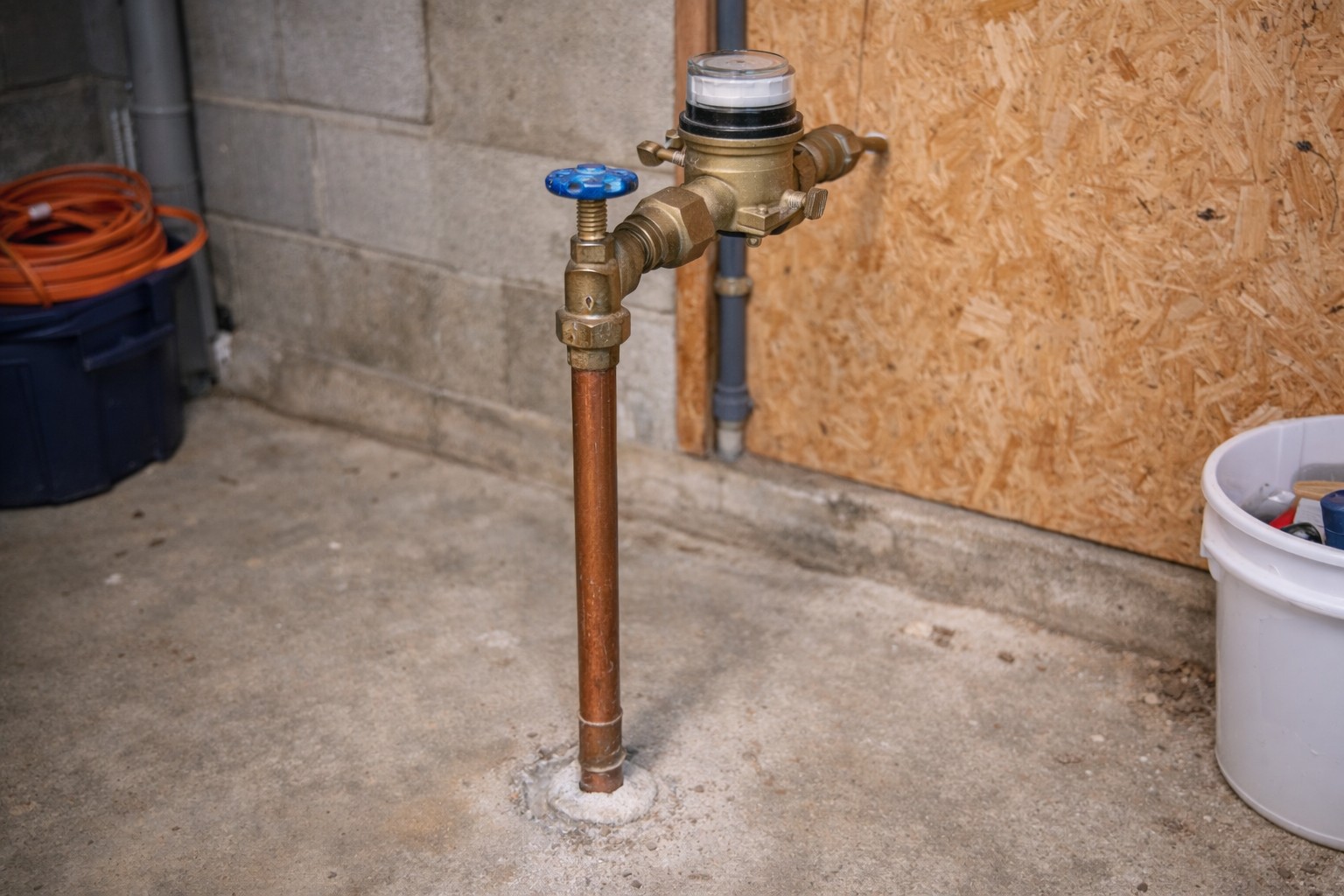
Quick Answer:
A connection that allows water to flow the wrong way — a crossover — can pull pressure down for the whole house. If a fixture, hose bib, or mixing device is letting supply and return water mix, upstream pressure may drop until the source can’t keep up. Check valves and pressure gauges will help locate the crossover so you can isolate and fix it.
Why This Happens
Flow reversal (crossover) happens when water moves from a supply line back into another part of the system, usually through a failed valve, open hose, or bypassing device. That reversed flow can let system pressure escape into a low‑pressure path, so the main service pressure falls and all fixtures feel weak.
Common causes:
- Failing mixing valves in showers or instant‑hot units.
- An open hose bib connected to low‑pressure irrigation or a garden system where pressure pulls back through.
- Malfunctioning check valves or bypasses on equipment like water softeners or boilers.
Step-by-Step What to Do
1. Confirm the symptom
Before tearing things apart, confirm the problem is a pressure collapse rather than a slow clog. Turn on a high‑flow fixture (like a bathtub) and watch household pressure or how other fixtures behave. If everything drops at the same time, suspect a system crossover.
2. Attach pressure gauges
Attach gauges to compare pressure on both sides of a suspect connection. Specifically, attach a gauge upstream and downstream of the suspect connection to see if pressure is equalizing or reversing when fixtures run. Note readings with fixtures off and then while running.
3. Isolate zones and fixtures
- Close isolation valves to sections (boiler loop, irrigation, softener bypass) one at a time and watch the gauges. If pressure returns when a section is closed, that section likely has the crossover.
- Shut off supply to appliances (dishwasher, washer) and test.
4. Inspect likely crossover points
Check these items:
- Hose bibs and outdoor faucets for backflow paths. If pressure recovers with outdoor valves closed, the hose bib could be the source.
- Mixing valves and thermostatic mixers that may pass hot to cold or vice versa.
- Bypass valves on softeners and filters that may be partially open.
5. Fix or replace the failed part
Once you find the crossover, repair or replace the valve, check valve, or failed device. After repair, re‑test with the gauges to confirm normal pressure under load.
6. Follow up checks
- Look for any debris or sediment that could have caused a valve to stick.
- Verify check valves are installed in the correct orientation and functioning.
- Run multiple fixtures to confirm the issue is resolved.
What Not to Do
- Don’t size PRV without fixing crossover.
- Don’t assume adding a pump is the solution before identifying the leak or crossover; a pump can make the problem worse.
- Don’t blindly close the main if you haven’t isolated the section — you could hide the symptom and lose valuable diagnostic information.
When to Call a Professional
Call a plumber if you can’t locate the crossover after basic isolation tests, if the crossover involves the water service or meter, or if repairing the failed device requires hard‑to‑access joints. Also call a pro if gauges show erratic or reversed readings that you can’t explain — that can indicate a hidden bypass or a failed check valve near the service line.
Safety Notes
- Turn off electrical equipment before working near pumps or electrically heated appliances.
- Release pressure before disconnecting fittings; use approved pressure gauges and follow manufacturer instructions.
- If you smell gas or suspect a sewer cross‑connection, stop and call a professional immediately.
Common Homeowner Questions
- Random hot water at cold tap — Could this be a crossover? Yes. A failed mixing valve or crossover can let hot water into cold lines; isolation and gauge checks help confirm.
- Water flows backwards through hose bib — Is that a likely cause? Yes. An open hose or a hose bib without a backflow preventer can allow reverse flow and collapse house pressure.
- Will tightening fittings fix the problem? Only if a loose fitting is the direct cause; most crossovers are due to failed internal valves and need replacement.
FAQ
- How fast can flow reversal drop pressure? — Almost immediately once a low‑pressure path opens and demand exceeds supply.
- Can a water meter cause this? — Yes, a faulty meter or meter bypass can create a reverse path and should be checked by the utility or a pro.
- Are pressure relief valves related? — Not directly; relief valves protect against overpressure and won’t stop a crossover from pulling system pressure down.
For more related articles, see the Flow Direction Reversal & Cross-Connection Issues hub.