Quick Answer:
If water suddenly flows back through a newly installed fixture, first shut the fixture’s shut-off stops to isolate it. That prevents more reverse flow while you check lines. Then test nearby cold faucets to see if water temperature or flow changes — that helps spot a cross‑connection or backflow source.
Why This Happens
Reverse flow after installing a fixture usually means water is finding an easier path back through the new fitting than through its intended route. Common causes include:
- a hot/cold line crossed or plumbed incorrectly during installation;
- a missing or failed one-way check valve at appliances or pumps;
- pressure differences created by a running appliance, pump or water heater;
- a temporary cross-connection between hot and cold lines.
Backflow can come from many places in a house. For example, outdoor hose setups can send water the wrong way; see Water flows backwards through hose bib for that kind of behavior. A malfunctioning water heater or recirculation loop can also push hot water into cold lines — compare symptoms with Water heater backflow symptoms.
Step-by-Step What to Do
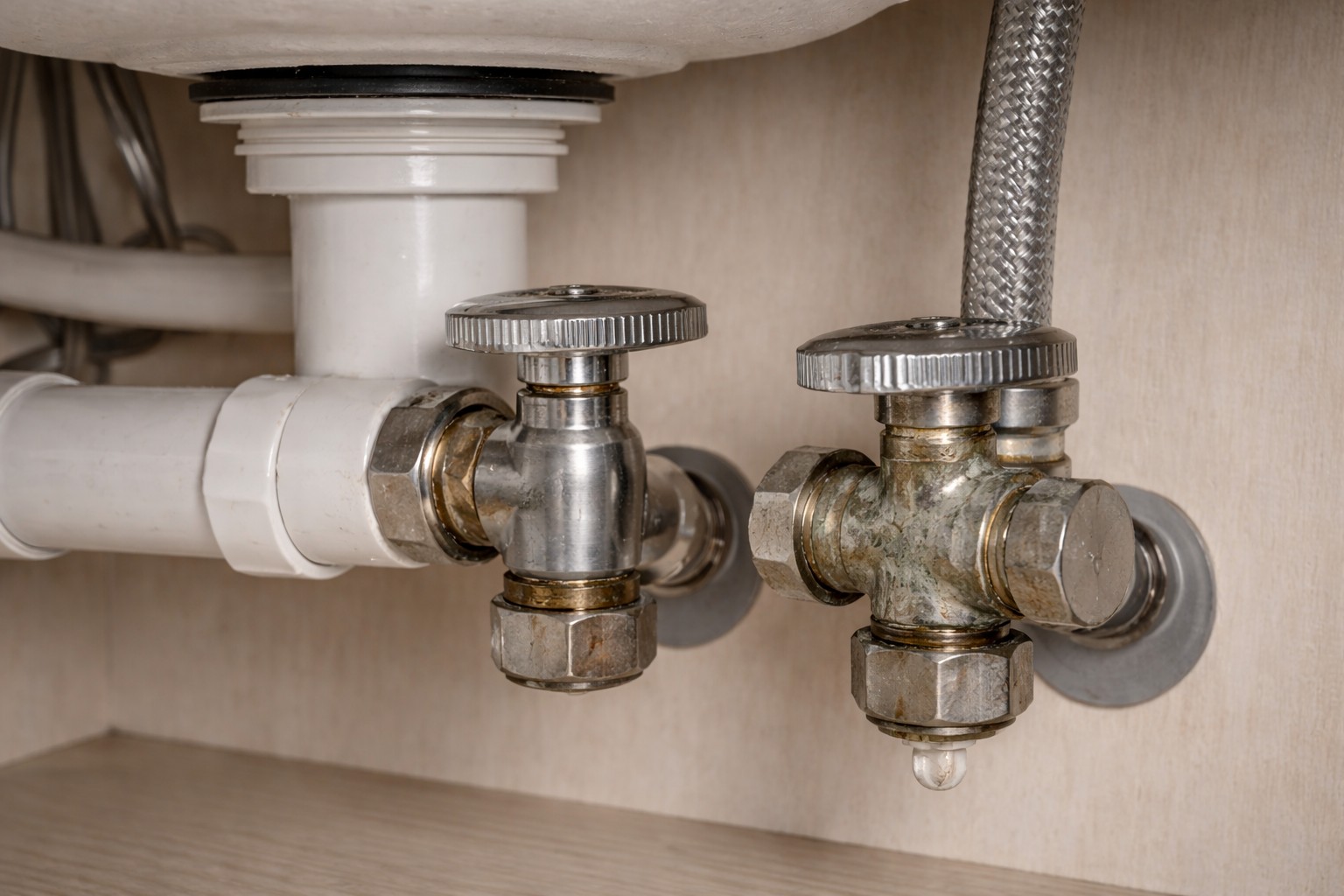
1. Shut the new fixture’s shut-off stops
Close the local shut-off valves (angle stops) on the fixture right away. This isolates the fixture so the problem won’t affect other fixtures while you diagnose it.
2. Retest nearby cold taps for temperature change
Open a cold tap at the same fixture group (or the nearest sink) and note the temperature and flow. If cold water comes out warm or the flow changes when the new fixture’s stops are open vs closed, that points to a cross-connection or backflow source.
3. Check other fixtures and appliances
- Turn off appliances that use water (dishwasher, washer) and any recirculation pumps.
- Watch whether the reverse flow stops when those items are off.
4. Inspect shut-offs and check valves
Look for installed check valves, mixing valves, or thermostatic valves near the new fixture and appliances. A missing or installed-backwards check valve is a common cause. If you find a valve that looks wrong, keep the fixture isolated and call a plumber if you’re not comfortable fixing it.
5. Reintroduce water slowly and observe
With the fixture still isolated, slowly open the house main or the branch valve you shut, then open the fixture shut-offs a little at a time while watching cold taps for any temperature change. If reverse flow returns, close the fixture stops again and move to the next checks.
6. Record what you see and decide next steps
- Note which actions stopped or started the reverse flow (closing a valve, turning an appliance off).
- If isolating the fixture prevents backflow, leave it shut until the source is fixed.
What Not to Do
- Don’t leave new fixture connected during testing. Leaving it hooked up can let contaminated or hot water continue to flow into the system or hide the real source.
- Don’t blindly remove parts you don’t understand — you could make the cross-connection worse.
- Don’t test by running hot water without first isolating the fixture; scalding risk increases if hot and cold paths are mixing.
When to Call a Professional
Contact a licensed plumber if:
- you cannot locate the source of reverse flow;
- the issue involves the water heater, a recirculation pump, or building-wide piping;
- you suspect a failed check valve or pressure device and aren’t confident making repairs.
A plumber can pressure-test lines, identify hidden cross-connections, and install or replace check valves to meet code and stop backflow for good.
Safety Notes
- Reverse flow can introduce contamination into potable lines. If you suspect contaminated water, isolate the source and avoid using taps for drinking until cleared.
- Watch for scalding: if cold taps deliver hot water, turn off hot water sources and isolate the fixture before testing further.
- If you shut off the main water, drain low points and be prepared for brief service interruption; coordinate with household members.
Common Homeowner Questions
- Will the new fixture be ruined by reverse flow?
Usually not if you shut it off quickly, but avoid using it until the cause is fixed. - Can I just swap the hot and cold lines to fix it?
No — swapping lines won’t fix an underlying backflow, and it may create scald risks or code violations. - Is this something my warranty covers?
Sometimes; check the fixture warranty and installation terms, but plumbing mistakes are often contractor responsibility rather than manufacturer warranty.
For more related articles, see the Flow Direction Reversal & Cross-Connection Issues hub.