Quick Answer:
If hot water suddenly shows up at cold taps across the house after pressure changes, the usual culprits are a failed check device, a recirculation loop or mixing valve crossover, or a pressure device installed or oriented incorrectly. Start by measuring hot vs cold pressure at the service entry, isolate the heater/recirculation loop, and confirm PRV orientation before making other changes.
Why This Happens
When pressure on the cold side drops or spikes, water can move through any available path into the lower‑pressure side. That path can be a failed check valve, a recirculation pump or loop without a working check, a thermostatic mixing valve, or a misinstalled pressure reducing valve (PRV). Temporary pressure events — municipal water main work, a sudden lot of demand, or a valve slamming closed — expose weak or misoriented devices and cause house‑wide crossover until the pressure equalizes.
Step-by-Step What to Do
1. Prepare safely
- Gather a water pressure gauge (hose bib style), basic tools, and a notepad. Turn off any smart circulation controls or timers so tests are consistent.
- Do not open sealed appliance panels or work on a gas appliance. If you must work near the heater, shut off power and fuel first and follow manufacturer warnings.
2. Measure hot vs cold pressure at service entry
- Attach the gauge to the cold service connection at the meter or main shutoff, and record steady pressure (psi). If your meter area has a test port, use that.
- Attach the gauge to a hot test port near the water heater or to a nearby hot faucet and record the hot side pressure. Compare readings to see if pressures match or differ during a pressure event.
- Repeat the measurements while simulating the pressure event if safe (for example, briefly opening and closing a nearby valve that caused the issue) to catch transient backflow.
3. Isolate the heater loop
- Locate the hot water recirculation loop valves around the water heater and the recirc pump. Close the supply and return isolation valves and turn off the recirculation pump.
- With the loop isolated, check cold taps. If hot water stops appearing in cold fixtures, the loop or its check valve is the likely path.
- If the issue persists after isolation, continue checking mixing valves and PRV devices elsewhere in the system.
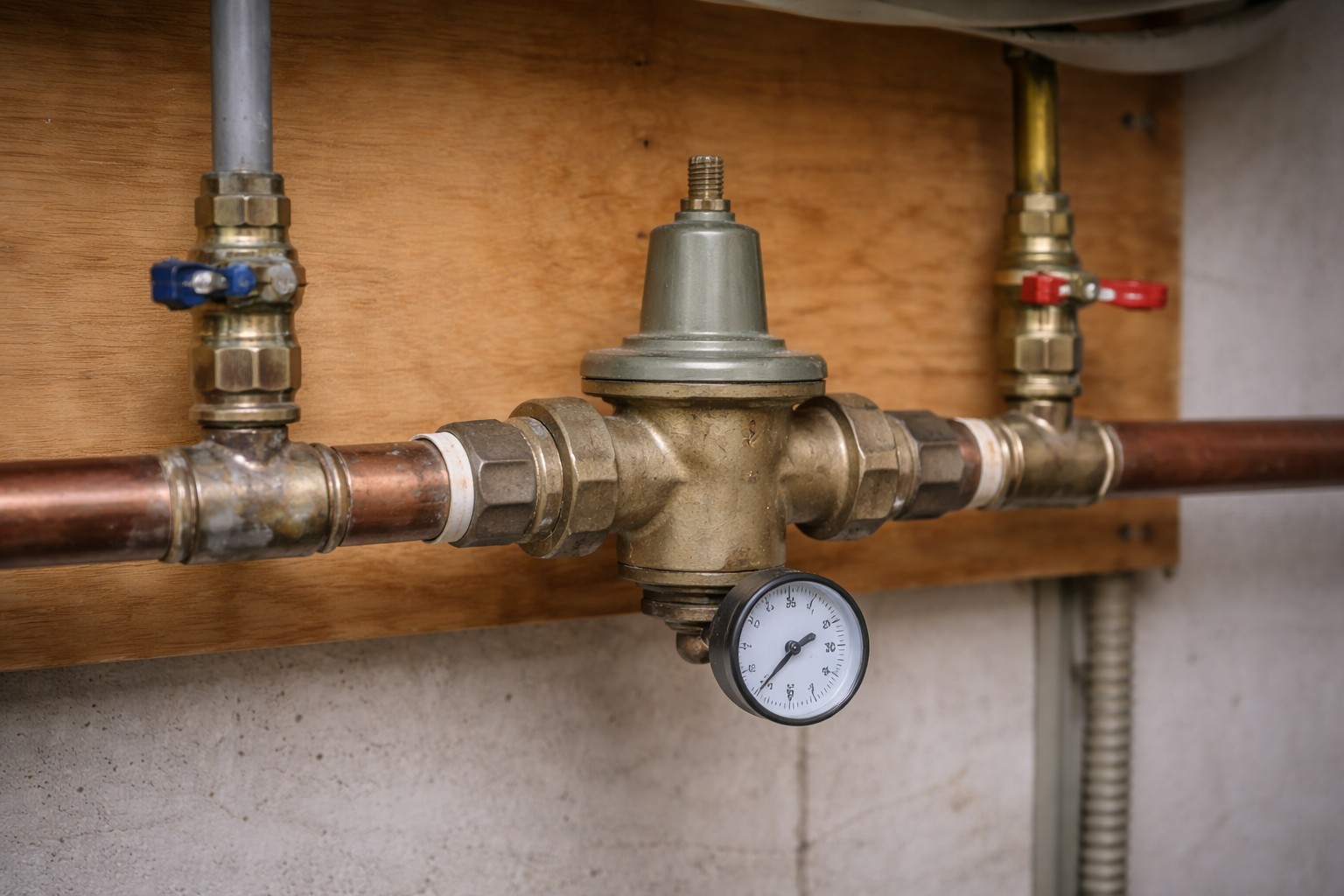
4. Confirm PRV orientation
- Find the pressure reducing valve on the incoming main (often near the meter or main shutoff). Look for the flow arrow stamped on the body — it must point toward the house supply.
- If the arrow is reversed or the PRV looks damaged or leaking, it can allow harmful flows during pressure events. Do not try to flip or replace a PRV without first shutting off the main and, if unsure, without professional help.
5. Check other common cross‑connection points
- Inspect thermostatic mixing valves (shower groups, boiler/hot water combos), washing machine hoses, faucet cartridges, and any device that connects hot to cold. A single failed cartridge or valve can create a house‑wide symptom when the system is stressed.
- Document what you find and which tests changed the behavior — this helps a plumber diagnose the problem faster if you call one.
What Not to Do
- Don’t assume crossover is harmless. Even intermittent mixing can cause scalds, appliance damage, and corrosion or sediment movement.
- Do not remove or tamper with a water heater’s pressure relief valve or safety devices.
- Don’t reorient or replace a PRV or pump without shutting off the main water and isolating power; these parts can be under pressure and require proper tools and procedures.
- Avoid guessing at internal tank repairs or disassembling sealed valves — those are job tasks for a licensed technician.
When to Call a Professional
- Pressure tests show large or inconsistent differences between hot and cold or between events.
- You cannot isolate the recirculation loop or you find a failed check valve, reversed PRV, or internal heater crossover that you’re not comfortable replacing.
- Hot water continues to appear in cold lines after you isolate likely sources, or you smell fuel/see corrosion, persistent leaks, or signs of backpressure.
- If the work requires changing or installing a PRV, check valve, or altering the water heater plumbing — these often require a licensed plumber and, in some areas, a permit.
Safety Notes
- Turn off electrical power to pumps and the water heater before working near them. Turn off gas supply to a gas heater before any service that affects the unit.
- Relieve system pressure before opening fittings. Use gloves and eye protection when working with pressurized lines.
- Be cautious of scald risk when testing taps. Briefly test temperature rather than running full flow from a hot source.
Common Homeowner Questions
- Why did this start after a municipal pressure event? Sudden drops or spikes reveal weak or one‑way devices; a faulty check or a backwards PRV will show symptoms only when pressures change.
- Can I stop it myself? You can run the basic tests: measure pressures, isolate the recirculation loop, and verify PRV arrow direction; if those point to a failed device, call a pro for repair.
- Could this harm my appliances? Yes — ongoing crossover can reduce appliance life and cause scalds, so address it rather than ignoring intermittent symptoms.
If you need to research related issues, check information about Cold water entering hot side or Backfeeding between fixtures for more detail on specific cross‑connection scenarios.
For more related articles, see the Flow Direction Reversal & Cross-Connection Issues hub.