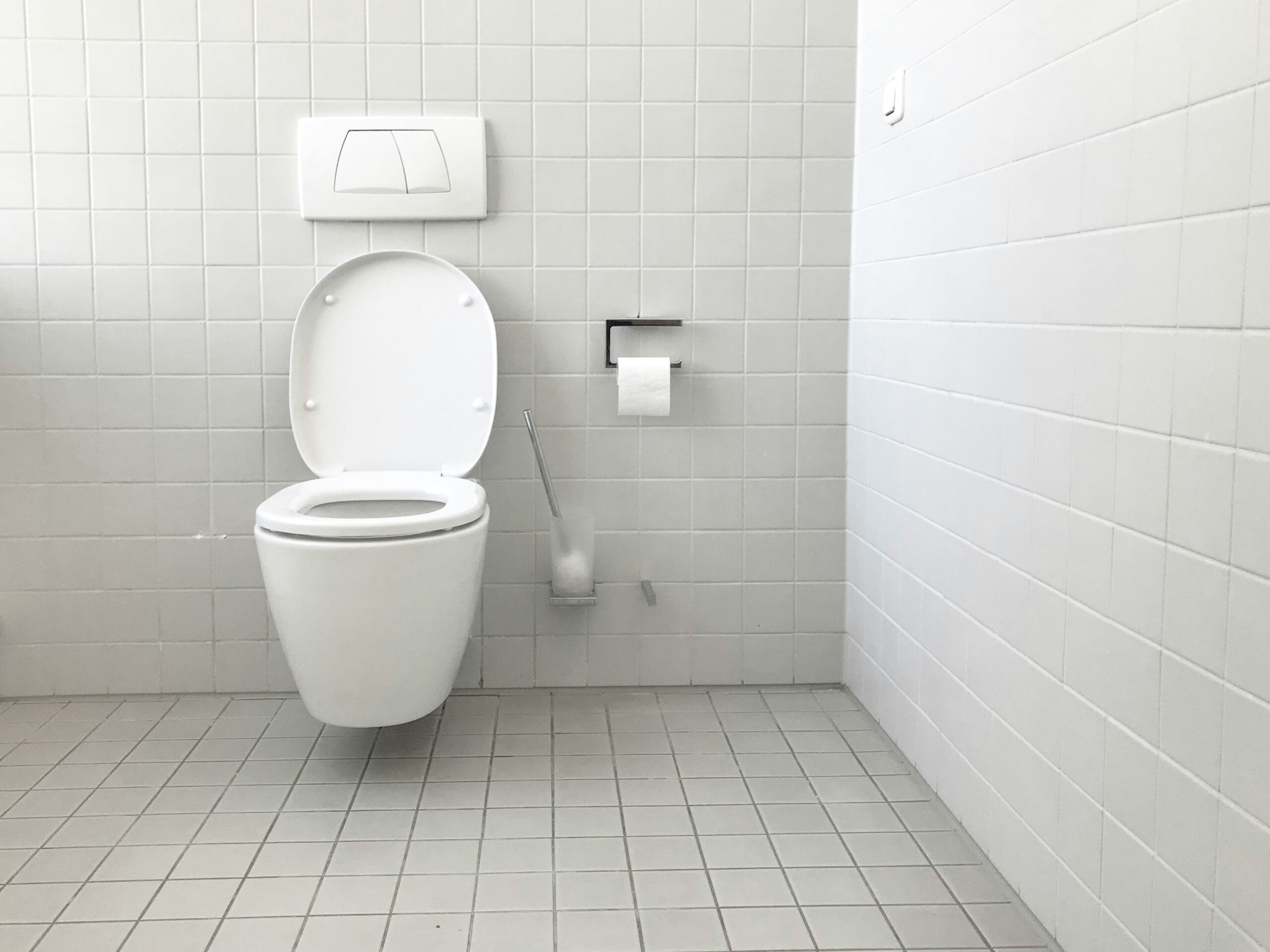
If the bowl is already unusually high or rising, do not flush again. Stop use and keep other people from flushing it. A known high bowl has not demonstrated enough receiving capacity for a diagnostic flush, bucket pour or nearby-fixture challenge.
Prevent further input
For a normally accessible gravity toilet with a known working supply stop, closing that stop safely can prevent further tank refill; it does not empty a full tank or isolate other fixtures from a shared drain. Do not force a corroded valve. If water is returning through several fixtures, stop water-using activities and arrange prompt drainage help. Keep away from sewage and wet electrical equipment.
Describe which level is high
- Rises during a flush, then slowly falls: report the existing event and drain-down pattern. A restricted toilet or downstream path is possible, but the level alone does not locate it.
- Changes while another fixture was used: record that original interaction. Do not recreate it by running sinks or tubs into a suspect shared path.
- Remains different at rest: compare with this toilet’s usual level and the actual model design. Bowl geometry and continuing input or drain conditions matter.
- Tank is high rather than bowl: continuing fill into an overflow is a different problem. Do not lower the tank setting as a generic treatment for a high bowl.
When is ordinary plunging reasonable?
Only an isolated, ordinary toilet obstruction with safe bowl headroom, no ongoing rise or shared backup, no added drain chemicals, no suspected sharp object or damaged fixture, and safe access is a candidate for the toilet/plunger manufacturer’s method. Wear appropriate splash protection, use controlled movement and stop if water rises or the attempt is ineffective. Do not use plunging to discover whether a near-rim bowl can contain the displacement. If chemicals were added, avoid splashing and tell the service provider the product and timing.
Get the right assessment
Call a plumber promptly for near-overflow, recurring high water, multiple affected drains, visible damage or an obstruction that does not respond to a suitable ordinary method. Building or public-sewer concerns may also need the manager or utility. The provider should assess the actual toilet, connected drain and any relevant vent arrangement; a high level alone does not prove a blocked roof vent or a main-line defect. Do not climb a roof or open cleanouts to investigate.
Does the tank control the bowl level?
In an ordinary gravity toilet, the bowl’s resting water seal is closely related to its trap geometry and refill arrangement, while tank delivery affects the flush and refill event. That does not mean every high-bowl condition is unrelated to incoming water. Identify whether the observation is transient, sustained or driven by continued input. Follow the actual model’s settings and do not change tank volume to force a blockage through.