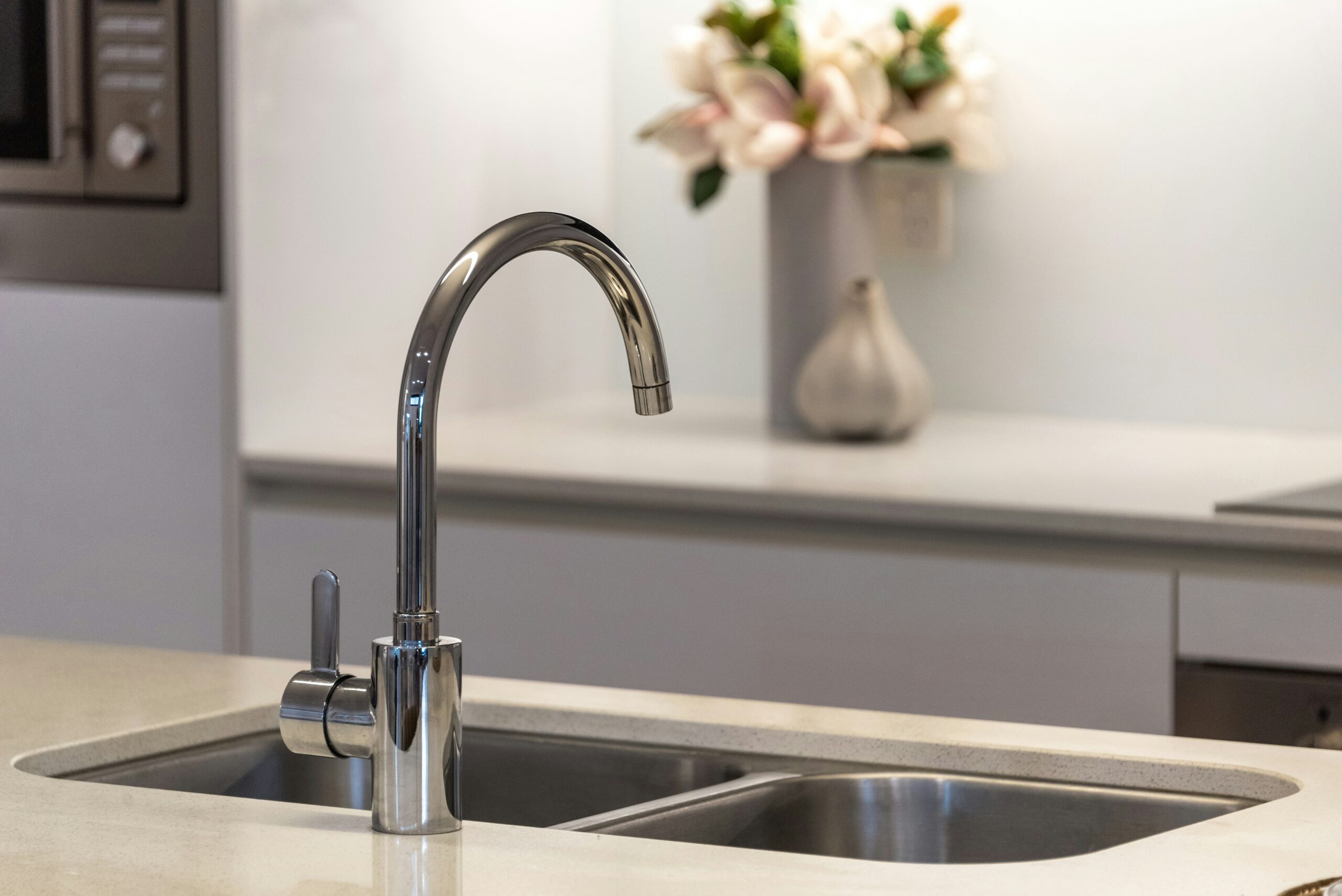
A fixture behaving differently after restoration needs its actual symptom and model identified. Do not add a second wrench to free a seized stop or remove a cartridge as a first step.
Safety before another test
If fuel gas is suspected, leave the building or affected area immediately. Do not operate valves, switches, plugs, appliances or phones there. Call the gas emergency service from a safe location well away, and wait for responders’ clearance.
Keep away from wet electrical equipment. Do not touch wet appliances, plugs or switches, or enter water to reach a breaker. When no gas leak is suspected, power may be isolated only from a safely accessible dry location; otherwise call an electrician or emergency help. Wet equipment needs qualified assessment before it is used again.
For uncontrolled water, use only a separate known safely accessible permitted owner control under its actual method without force, or obtain prompt supplier/plumber help. Do not approach wet electrical equipment or operate unknown shared, fire-system, meter or curb controls. Urgent containment comes before documenting the fault.
Keep the original work and event record
- Original affected outlet, supply side and symptom: weak delivery, sticking, leak or unstable temperature.
- Actual fixture/stop model, prior work and supplier restoration information.
- Existing debris or readings without another full-flow/hot challenge.
What the observation establishes
A removable outlet screen, supply stop and retained mixing cartridge have different service boundaries. Deposits after work are possible but not unique proof of source. Many multi-turn controls and quarter-turn controls have different intended travel.
What to do next
- Confirm only a sound identified permitted owner valve under its actual method. Stop for resistance, pipe movement or leakage; no wrench leverage or repeated rocking.
- Any appropriate removable-aerator owner care needs the actual part and cleaning instructions, controlled discharge and an accepting drain. Do not pull hoses or open supplies for a raw-flow test.
- Do not purge high/low hot and cold fixtures as a cure before actual source/readiness conditions are established.
- Before cartridge work, identify and isolate both hot and cold feeds and any other relevant supply, release pressure and verify no sustained feed. One stop alone is not enough.
- Choose compatible targeted service from actual damage/model evidence; neither routine cleaning nor immediate whole-fixture replacement is a universal answer.
Before any retained parts are opened
Before any internal service or fitting removal, identify and isolate every supply that can pressurize the section, release trapped pressure through the appropriate controlled outlet and verify depressurization. Account for hot water and possible alternate feeds. Lowering a PRV setting, reducing flow or wearing gloves does not make a pressurized assembly safe to open. If isolation cannot be established, leave it assembled and obtain qualified help.
A main valve cannot isolate its own supply side. Its closed handle or an open downstream tap does not unload its inlet, body or upstream connection. Intrusive work on it needs separate effective upstream isolation and verification. A fixture cartridge can have both hot and cold feeds; one closed stop does not establish safe isolation.
Keep every relevant supply isolated while a retained component or connection is open. Fully secure compatible rated parts before actual controlled restoration and leak/function checks. A required service flush needs its relevant securely connected path, accepting discharge and source-off refitting; do not reopen upstream supply into exposed pipe or a removed part aimed at a bucket.
Can I force a reluctant stop so I can clean the cartridge?
No. A failed isolation needs safe independent control and assessment first. Comfort with the cartridge does not make a seized supply stop reliable.
Related guides
- Sediment clogging fixtures post repair
- Meter behaving oddly after plumbing work
- Random dripping after repair
- Pressure problems after valve replacement
- Post-Repair Water Entry Behavior